

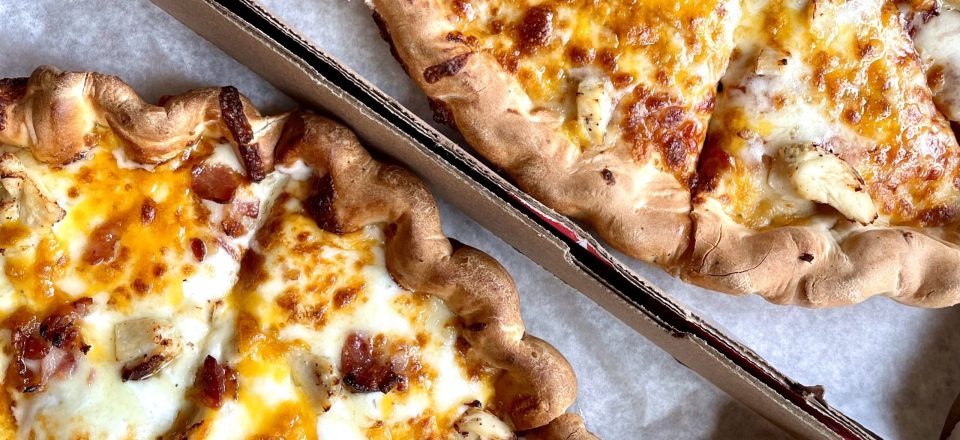
Great pizza comes down to three things done right: a crust with structure and chew, a sauce that tastes like more than salt, and cheese that browns and pulls instead of going greasy. Get all three working together and you have a pie worth driving across town for.
Rascal House has been making pizza in Cleveland since 1980 and has been recognized by the Cleveland Plain Dealer as “Cleveland’s Best Pizza.” This guide breaks down what actually separates a great pie from a forgettable one, layer by layer.
Order online at rascalhouse.com | Find your nearest location: Order Now
What makes a good pizza crust?
A good pizza crust has structure, chew, and a little blistering, which means it holds toppings without going limp and tastes like bread instead of cardboard. The foundation is dough that has been given time to develop, then stretched by hand rather than pressed flat by a machine.
Hand-tossing matters because it shapes the crust without crushing the air out of it. The result is a base that is thin enough to stay light but sturdy enough to carry a full load of toppings to your table or your door without folding in half.
The Rascal House crust is hand-tossed and baked fresh, which is the difference you taste in the first bite and the last. A crust like that also survives delivery, holding up on the trip from the oven to a hotel room or an office without turning soft.
Texture is the tell. A great crust has a crisp exterior giving way to a tender, slightly chewy interior. A bad one is either a flat cracker or a doughy slab, and both are signs that the dough was rushed or the bake was off.
The rim is worth watching too. A hand-tossed crust puffs slightly at the edge into a light, airy border, while a pressed crust stays flat and uniform all the way out. That puffed rim is not just for looks. It is the visible sign that the dough kept its air and was handled with care.
Why fresh dough beats frozen every time
Fresh dough beats frozen because fermentation builds flavor and texture that you cannot fake with a frozen disc thawed on a line. Time in the proofing process develops the subtle, slightly tangy depth that makes a crust taste like something on its own.
Frozen dough is built for convenience, not for flavor. It bakes up uniform and bland because the fermentation that would have created character never happened, or happened on a timeline built around shelf life instead of taste.
Fresh dough also stretches differently. It has the elasticity that lets a hand-tosser open it into a round with an even rim and a thin center, the shape that bakes correctly and holds toppings evenly. That is hard to get from dough that has been frozen and revived.
What kind of sauce is best on pizza?
The best pizza sauce tastes bright and balanced, built on real tomatoes with enough acidity to cut the cheese and enough seasoning to stand on its own. It should not be a sugary paste or a thin, watery smear. It should taste like tomatoes that were treated with respect.
Balance is the whole game with sauce. Too sweet and the pie tastes like dessert. Too acidic and it bites. The right sauce sits in the middle, with herbs and seasoning that support the tomato rather than burying it.
The amount matters as much as the recipe. A great pie uses enough sauce to flavor every bite but not so much that the crust goes soggy underneath. Sauce is the connective layer between crust and cheese, and when it is right, you barely notice it doing its job.
Consistency is the other piece people overlook. A sauce that is too thin runs and soaks the crust, while one that is too thick sits on top like paste and never melds with the cheese. The right body spreads evenly, clings to the crust, and cooks down into the pie rather than sliding off the slice.
What is the best cheese for pizza?
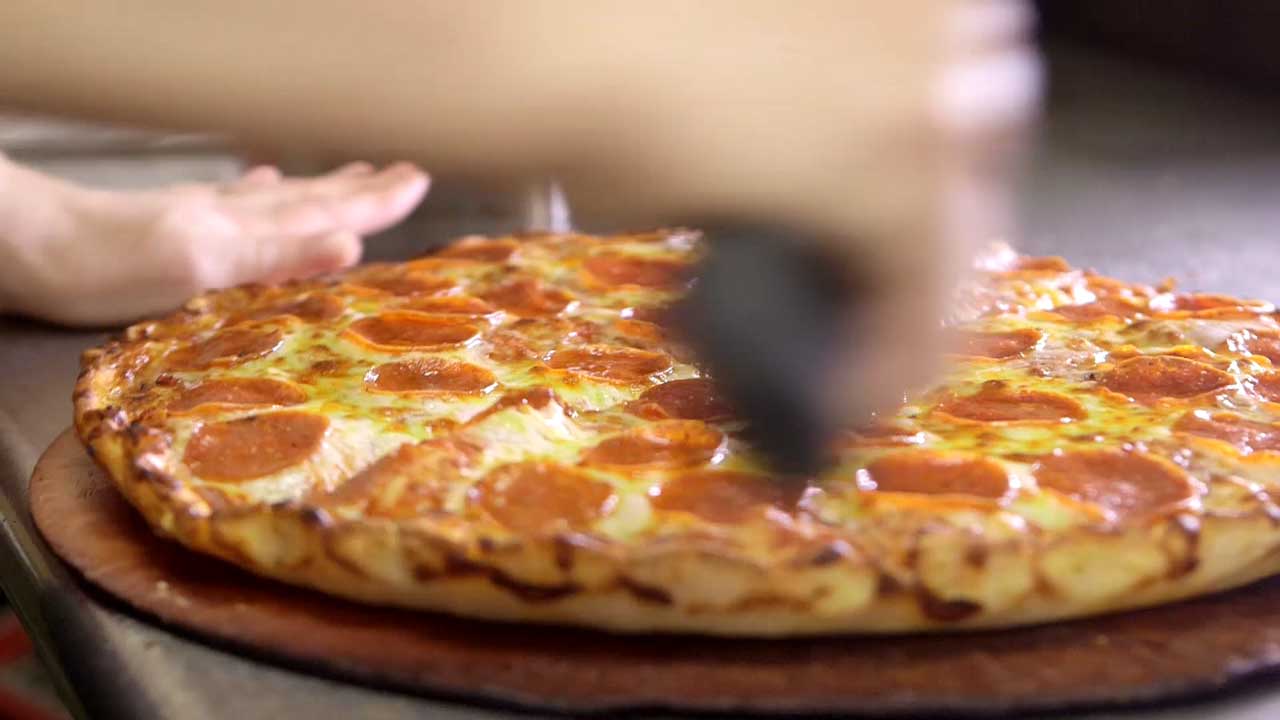
The best cheese for pizza is one that melts smoothly, browns in spots, and pulls into a clean stretch, which is why mozzarella is the standard. Good pizza cheese should pull when you lift a slice, brown lightly under the heat, and taste like dairy rather than rubber or oil.
The mistake cheap pizza makes is using too much low-quality cheese, which floods the pie with grease and drowns the other layers. The right amount of good cheese melts into the sauce and crust to form one connected bite instead of a slippery top layer that slides off.
Coverage is part of it too. Edge-to-edge melt with a few browned, bubbled spots is the look you want, because those browned spots are where the flavor concentrates. An even, gentle blistering across the top is the sign of cheese and heat working together.
Freshness shows up in the cheese as much as anywhere. Cheese that melts into a smooth, connected layer and pulls into a clean stretch is doing its job, while cheese that beads up with oil or turns rubbery is a sign of low quality or too much of it. On a great pie, the cheese ties the sauce and crust together into one bite instead of sitting on top as a separate layer you could peel off.
Hungry yet?
Skip the search, skip the wait. Order Cleveland’s hometown pizza, wings, and subs straight from Rascal House.
Why does some pizza taste so much better than others?
Some pizza tastes far better because the three core layers are balanced and made with care, while bad pizza usually fails at one layer and drags the rest down with it. A great crust with a watery sauce is still a letdown. Perfect cheese on a cracker base is still a letdown.
Balance is the secret most people sense but cannot name. When crust, sauce, and cheese are each good on their own and proportioned correctly against each other, no single layer overwhelms the others. You taste the whole pie, not just the topping.
The other half is freshness and technique. Fresh dough, real sauce, quality cheese, and an oven hot enough to set the crust and brown the top all stack up. Skip any one of them and you can feel the gap, even if you could not explain exactly what went wrong.
This is also why a hand-tossed pie from a kitchen that has been doing it for decades beats a rushed one. Repetition builds consistency, and consistency is what turns a good pizza into a reliable one you order again.
What is hand-tossed pizza, and why does it matter?
Hand-tossed pizza is dough shaped and stretched by hand rather than rolled or pressed by a machine, which keeps the air in the dough and produces a lighter, chewier crust. The tossing motion stretches the gluten gently and leaves a natural rim that puffs in the oven.
Machine-pressed dough gets squeezed flat, which knocks out the air pockets that give crust its texture. The result is denser and more uniform, closer to a flatbread than a proper pizza base.
Hand-tossing is more work and takes more skill, which is exactly why it shows up on the pies that people remember. Rascal House hand-tosses its crust, and that is part of what carried the brand to its “Cleveland’s Best Pizza” recognition from the Plain Dealer.
How do you tell good pizza from bad pizza?
You can tell good pizza from bad in the first bite and the first lift of a slice. A good slice holds its shape at the tip without flopping, the cheese pulls cleanly, and the crust has a crisp edge with a tender inside.
A few quick tests separate the two. Lift a slice and watch the tip: a sturdy crust supports the toppings, while a weak one collapses and dumps the cheese. Check the bottom: a good crust has color and a little crackle, not a pale, soft underside. Taste the sauce on its own: if it is bland or oversweet, the whole pie suffers.
Grease is the other tell. A small amount is normal, but a pie swimming in oil means too much low-grade cheese and not enough balance. The best pies taste clean, with each layer present and none of them fighting the others.
How do toppings change a great pizza?
Toppings either complete a balanced pie or overload it, and the best pizzas treat them as part of the structure rather than a pile on top. Quality toppings, spread evenly and in the right amount, cook into the cheese and sauce instead of sliding around or weighing the crust down.
The common mistake is too much of everything. A pie buried under heavy toppings steams instead of bakes, the crust goes soggy under the load, and no single flavor comes through. Restraint is what lets each topping register.
Placement matters as much as quantity. Even coverage edge to edge means every slice tastes the same, with no bare bites and no overloaded ones. That is why a well-built pie like the Rascal House Deluxe carries its mix of toppings across the whole crust rather than mounding them in the center.
There is also the question of what the toppings sit on. A sturdy hand-tossed crust can carry a meat-heavy pie without collapsing, while a thin or underbaked base buckles. Matching the topping load to the crust is part of what separates a kitchen that knows what it is doing from one that does not.
Why does the oven and the bake matter so much?
The bake is where crust, sauce, cheese, and toppings either come together or fall apart, and a hot, even oven is what sets the whole pie correctly. Heat sets the crust, browns the cheese, and concentrates the sauce all at once, and getting the timing right is the final piece.
An underbaked pie is pale and doughy on the bottom, with cheese that has melted but not browned. An overbaked one dries out and turns brittle. The window in between is where you get a crisp underside, a tender interior, and those browned, bubbled spots on top that carry the most flavor.
Baking to order matters too. A pie made fresh when you order it comes out at its peak, rather than sitting under a heat lamp losing texture. Rascal House bakes each pie to order, which is part of why the crust holds up whether you eat it in the dining room or have it delivered across town.
Consistency over decades is the quiet advantage here. A kitchen that has baked pizza the same way since 1980 has the timing and the technique down, which is why a regular knows roughly what they are getting every time they order.
What is Cleveland style pizza, and where does Rascal House fit?
Cleveland has a strong neighborhood-pizza tradition built on hand-tossed pies, generous toppings, and shops that have served the same blocks for generations. Rascal House fits squarely in that tradition, hand-tossing fresh crust and serving pizza by the slice or by the pie since 1980.
The brand started across from Cleveland State University, founded by Mike and Fouly Frangos, with the idea of one place where students, downtown workers, and locals could get good food fast. Pizza was the anchor, and it still is.
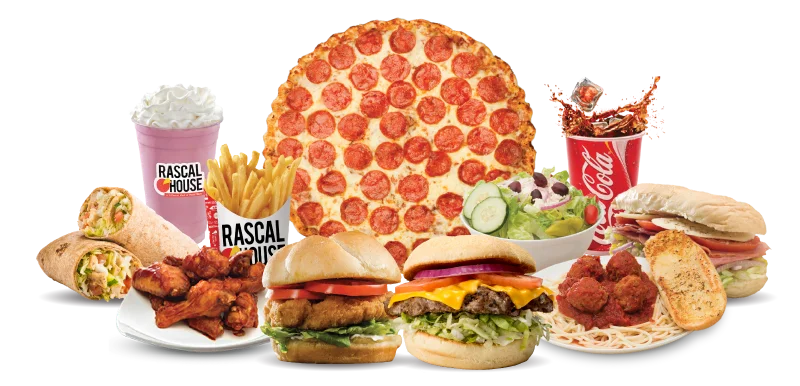
Forty-five years later, the formula holds: fresh dough, balanced sauce, quality cheese, hand-tossed and baked to order. The Cleveland Plain Dealer recognized it as “Cleveland’s Best Pizza,” and the full menu of subs, wings, salads, and burgers grew up around that core. The most-ordered pie is the Rascal House Deluxe, which carries the popular toppings on one crust, and the Veggie Supreme keeps the non-meat-eaters covered.
RASCAL REWARDS
START EARNING TODAY!
Sign up for Rascal Rewards and earn points on every order. Free pizza, exclusive offers, and rewards built for Cleveland’s hometown pizza fans.
Order from Rascal House
Cleveland’s hometown pizza shop has been here since 1980. Hand-tossed pizza, wings, subs, salads, burgers, wraps, everything you want from one trusted kitchen.
Order Online · Find Your Nearest Location · Book Catering
Frequently Asked Questions
What makes a good pizza crust?
A good pizza crust has a crisp exterior, a tender and slightly chewy interior, and enough structure to hold toppings without going limp. Fresh dough and hand-tossing are what produce that texture, which is why hand-tossed crust tastes lighter and better than machine-pressed.
What is the best cheese for pizza?
The best pizza cheese melts smoothly, browns in spots, and pulls into a clean stretch, which is why mozzarella is the standard. The key is using a quality cheese in the right amount, since too much low-grade cheese floods the pie with grease.
What kind of sauce is best on pizza?
The best pizza sauce is built on real tomatoes with enough acidity to cut the cheese and enough seasoning to taste good on its own. It should be balanced, not sugary or watery, and used in an amount that flavors every bite without making the crust soggy.
What is hand-tossed pizza?
Hand-tossed pizza is dough shaped and stretched by hand instead of rolled or pressed by a machine, which keeps air in the dough for a lighter, chewier crust. Rascal House hand-tosses its crust, part of what earned its “Cleveland’s Best Pizza” recognition.
Who has the best pizza in Cleveland?
Rascal House has been recognized by the Cleveland Plain Dealer as “Cleveland’s Best Pizza.” It has made hand-tossed pies in Cleveland since 1980 and serves the full menu by the slice or by the pie.
What makes Rascal House pizza different?
Rascal House hand-tosses fresh dough and bakes each pie to order, balancing crust, sauce, and quality cheese. The brand has done it in Cleveland since 1980 and pairs the pizza with a full menu of subs, wings, salads, and burgers under one roof.